
Crawling to Clarity: How KWT Spider and Screaming Frog Help Uncover Technical SEO issues
Oct 1, 2026
First story
Seeking
Visibility


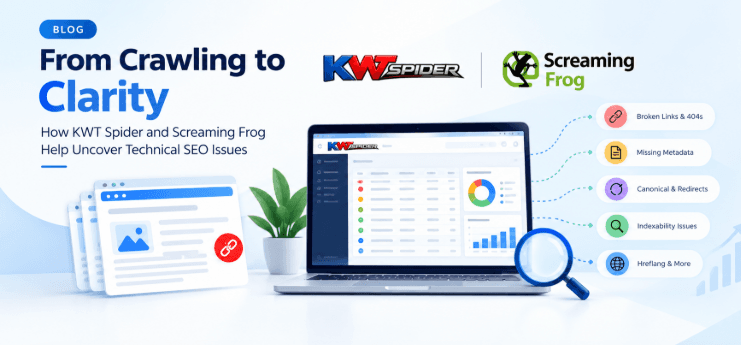
A website can look normal to visitors and still have technical SEO issues working quietly in the background. Broken links, missing metadata, incorrect canonical tags, redirects and indexability problems can easily go unnoticed during everyday browsing. As a website grows, manually checking every page becomes time consuming and difficult to manage. This is where a technical SEO crawler comes in. Tools such as KWT Spider and Screaming Frog scan a website. They collect the technical data and put all the possible problems in one place. Instead of checking pages individually, an SEO audit can start with a broader view of how the site is built and connected.
Why Technical SEO Issues Are Easy to Miss
Many technical problems are visible on the page itself. A page may load perfectly and still have the wrong canonical URL or a robots directive that prevents it from being indexed as intended. Even an internal link can quietly point to a page that no longer exists without creating an obvious problem for visitors. As the website grows, these small issues can become much harder to track. A crawler makes this process easier by checking URLs across the site and highlighting technical details that might otherwise be missed during a manual review.
What Does a Technical SEO Crawler Find?
What a crawl reveals depends on the tool being used and how it is configured but a technical SEO crawl can uncover a wide range of issues across a website.
A technical SEO crawl can uncover issues such as:
- links and 404 errors
- Redirect chains or loops and wrong HTTP status codes
- Missing or duplicate title tags
- Meta description problems
- Incorrect or conflicting canonical URLs
- Indexability issues and wrong robots directives
- Poor heading structure
- Missing or incorrect image alt text
- Weak internal linking
- Hreflang implementation errors
- Structured data issues and other technical details
The advantage is not simply having more data. It is being able to understand where issues are happening and see whether they affect a single page or are repeated across the website.
From Crawl Data to Clearer Insights
A crawl can uncover a lot of information. But more data does not always make an audit easier. When hundreds or even thousands of findings appear at once it can be hard to know where to start. Going through all those results can sometimes feel just as difficult as finding the issues in the first place. This is why the way form crawl results are presented matters. Clear categories and focused diagnostic views make common issues easier to spot. They also help show whether a problem appears on one page or across the wider website.
For example a single missing meta description is very different from hundreds of pages using the same title. Looking at the bigger picture gives each finding more context. It also makes the crawl results easier to use when deciding what to review next during an SEO audit.
Where Screaming Frog Fits
Screaming Frog is a popular tool for site crawling and technical SEO analysis. It checks important areas such as links, metadata, redirects, canonical URLs, headings and indexability. It also includes features like JavaScript rendering, custom extraction, integrations, crawl comparisons and visualisations. These features can be valuable for SEO professionals who want more control over the crawl and need to look at specific technical issues.
Where KWT Spider Fits
KWT Spider takes a concentrated approach to website crawling and technical SEO analysis. It brings together important information about pages, links, metadata, images, status codes, indexability and other technical details, giving a clearer picture of what is happening across a website. Its diagnostic views bring common technical matters into clear categories, covering areas such as broken links, redirects, duplicate content, missing metadata, headings, canonical tags, hreflang and status codes. Keeping related findings together makes the crawl results easier to navigate and review during an audit. The tool is designed for website owners, SEO specialists, developers and digital marketing teams that need a practical way to examine technical website data.
Different Crawls for Different Situations
There is no condition for a website audit to start from the homepage, as the analysis can begin from any relevant page.
A Spider Crawl starts with a URL and follows internal links to discover pages throughout the website. A List Crawl works from a specific set of known URLs, making it useful for tasks such as website migrations, redirect checks, or reviewing a particular section of a site. An Offline Crawl is useful when a website is still being developed on a local machine. It allows technical issues with resources such as CSS, JavaScript and images to be checked before the site goes live, giving teams a chance to address problems earlier in the development process. This flexibility matters because not every SEO task requires a complete crawl of a live website.
Turning Findings Into Action
Finding technical problems is only one part of an SEO audit. The next step is understanding what those issues mean and how they affect the website. A single broken image is not the same as hundreds of broken internal links. A few missing titles may require less attention than a site-wide canonical problem. Looking at how often an issue appears and where it occurs helps give the crawl results more meaning and makes it easier to understand the bigger picture. Both KWT Spider and Screaming Frog provide useful technical information for looking into these areas. However, the way each tool handles crawling and presents its features is different.
From Crawling to Clarity
A website crawler can reveal details that are easy to miss during normal browsing. It can show how pages are connected and where redirects occur. It can also highlight URLs with indexing issues and missing or incorrect SEO elements. KWT Spider and Screaming Frog approach technical crawling differently, but the purpose is similar: turning a complex website into information that is easier to examine. The real value of a crawl comes after the data has been collected. Once recurring issues are identified and their context is understood, technical SEO findings become much more than a list of errors; they become a clearer starting point for maintaining a healthier, more accessible website.
- First Story
- Internet Access
- Digital Skills