
GOD'S CALL HAS NO GENDER
Sep 22, 2026
Story
Seeking
Encouragement
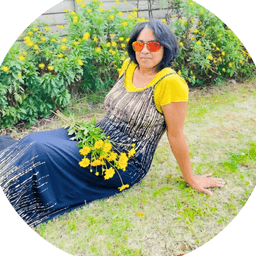


I am a brand-new full-time Theology student. Fifteen years ago, I ignored this calling. Finances were difficult, I was uncertain how I would be received, and theology in my church community was male-dominated. I allowed those realities to quiet what I now understand was God’s persistent invitation. Yet a calling delayed is not a calling destroyed.
Since beginning this journey, I have encountered the same barriers in new forms. Church organisations have refused financial help, telling me I would not receive first priority—first because I am a woman, and secondly, because I am a woman of colour. Another organisation said it could not add another student to the number it already supports. At present, I am the only female Theology student on their books and the only woman in my class. Do they understand that this is a Divine Calling? What wrong message does this exclusion amplify? That women belong at the margins? I reject that message. Evidence shows that women remain significantly underrepresented in church leadership. One South African study examining 25 churches found that only 274 of 5,835 pastors were women, representing approximately 4.7%, or fewer than one in twenty-one pastors.¹ Globally, the World Communion of Reformed Churches reported that although 83% of its member churches permit the ordination of women, women make up only 33% of ordained pastors.² Permission, therefore, does not always result in equal representation or equal opportunity. I reject the message that women belong at the margins. A calling should not be dismissed because it comes through a woman, and leadership should not be restricted by gender or race.
Reference:
https://repository.up.ac.za/items/e759ef19-643e-4f59-a809-6949642068fb
Female Pastors who went before me have shared stories of hardship and sadness, including opposition and difficulties caused by other women. This hurts me deeply. It is painful to think that women are sometimes made to struggle by their very own sisters. I remember one of the first times I shared what I was studying in response to a woman’s question. After I told her that I was studying Theology, her expression changed. She looked at me blankly and offered no response. I was not standing there waiting for affirmation or encouragement, but I could not ignore the message communicated through her silence and body language. Perhaps I misread the moment. Perhaps she was simply surprised, shocked, or unsure how to respond. Or perhaps she had assumed that, as a woman, I would be studying a course traditionally associated with women. Whatever the reason, the moment reminded me that women who pursue areas of leadership are still challenged by deeply held expectations. To the unsupportive women, I appeal firmly but lovingly: please remove the veil from your eyes and see clearly. You are not protecting the church by obstructing women; you are reinforcing the same barriers that once held women back. Sisterhood can tell a different story. We can make room, offer encouragement, and become the example of courage and welcome that another woman needs.
My faith is rooted in a conviction no gatekeeper can overturn: God has no gender, God does not select according to gender, and uses ordinary people. God is not limited by the categories people use to decide who is worthy, prepared, or welcome. When humans say no, God says yes. Throughout history, God has worked through ordinary people who were overlooked, underestimated, or considered unworthy by those around them. Their significance did not come from having the approval of every institution or authority. It came from responding faithfully to the purpose placed within them. I believe that women, people of colour, and those who have been pushed to the margins are not exceptions to God’s work. They are part of the fullness of humanity through which God continues to bring wisdom, compassion, courage, and change. Human beings may close doors because of fear, tradition, prejudice, or limited understanding, but their decisions do not have the final word over my life. I do not claim that every obstacle is automatically a sign of divine approval, nor do I believe that a calling removes the need for preparation, accountability, or integrity. Rather, I believe that no barrier should be allowed to silence a person whose life is demonstrating commitment, compassion, and a willingness to serve. My calling must be tested through faithfulness, discipline, and the good it brings to others, not dismissed simply because it comes through a woman.
Some days still bring despondency, but I am a woman of God and a force to be reckoned with. I enter class with grace, poise, integrity, deep consideration, femininity, and confidence. I offer quiet and timely affirmation. I intentionally wear dresses so I stand out, not as an apology for my femininity but as an unapologetic expression of who I am. There are moments when I am passed over while others exchange handshakes around me. Still, I offer my hand—not because it is always returned, but because I want to remain true to the warmth and respect I carry and I will not let someone else’s omission determine the kindness I choose to show. I hum a pitched melody to remind the men that a woman is in their circle and is not going anywhere. I submit assignments early and achieve 80 percent and above in mid-term tests. With each small act of resilience, I dig a little deeper and clear another stone from the path ahead. Slowly, the barriers give way, and a pathway emerges. Each small effort becomes part of a larger testimony, a story of strength, courage, and perseverance.I am here, I am called, and I will not disappear.
To my brothers in Christ, I say this with love and conviction: the calling is not only for men. Make room for the women God is calling, just as I will honour the men who walk faithfully beside me. Making room for women does not take anything away from men; it creates space for everyone to contribute, grow, and thrive. Equality begins when we recognise that gifts, wisdom, and leadership are not limited by gender. Show compassion by listening without defensiveness, encouraging without comparison, and supporting women as they pursue their purpose. When men and women respect one another and grow together, we build stronger communities marked by dignity, fairness, and mutual understanding.
Men - I am, I can, and I will because a Higher Power already said, YES