
I carry the voices of 500 women leaders to end femicides
Sep 24, 2026
Story
Seeking
Encouragement
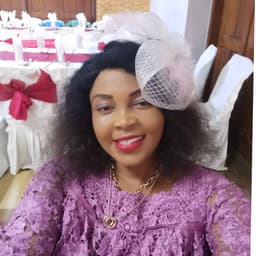

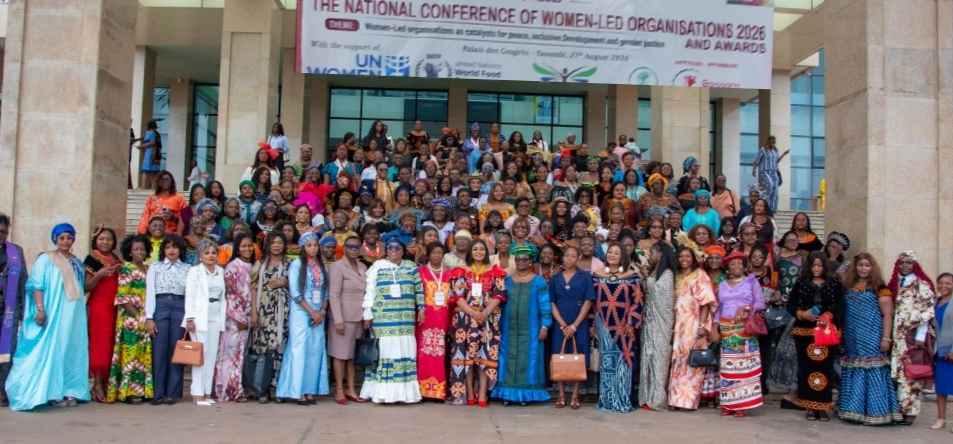
Photo Credit: Myself
National conference of women led organisations 2026 by Solange Swiri Tumasang
On the 26th of August 2026 in Yaoundé, women travelled from all over Cameroon to attend the National Conference of Women-led Organizations, women who came hungry for change, women who came bearing grudges against the government, against institutions, against women themselves, against men, and against a system that, in many ways, has continued to fail women who are crying out for protection, justice, dignity and safety. I, Dr. Solange Swiri Tumasang, the host and convener of this particular conference, had this urge to bring women together, not only women, but women-led organizations, to come together and spread, share and exchange what they have been experiencing in their communities, because I strongly believe that women cannot continue to suffer in isolation when there are women leaders, organizations and communities that can come together, listen to one another, learn from one another, build partnerships and collectively search for solutions to the problems that women face every day.
Women are killed every day by their partners, killed in relationships, killed in situations where love is supposed to offer protection and security, or killed just for the sake of love, and where do we rush to when this happens, where do women rush to when they are threatened, when they are beaten, when they are abused, when they are afraid that the person they once trusted with their life may become the person who takes that life away? Where do we rush to when a woman is faced with gender-based violence and desperately needs someone, an institution, a system or a safe space to protect her before it is too late? These are questions that cannot continue to be asked after another woman has died, after another family has been left grieving, after another child has been left without a mother, because prevention must come before tragedy, protection must come before death, and justice must not begin only when a woman is already dead.
This conference was an opportunity for women to stand strong and to reaffirm their commitment to fighting against femicide and ending gender-based violence, an opportunity for women to come together and say that enough is enough, that the killing of women cannot continue to be treated as isolated incidents, private family matters or unfortunate events that we mourn for a few days before moving on with our lives. The more than 500 women who gathered in Yaoundé brought with them stories, frustrations, experiences and painful realities from their communities, and they complained about the slowness in legal proceedings, about the unjust treatment of victims, about the lack of safe spaces for victims, and about the many gaps that exist between a woman experiencing violence and the protection she desperately needs.
The conference therefore became an opportunity for women to build partnership ties, to seal friendship links, to exchange experiences and to establish the necessary connections to advance the fight against femicide in Cameroon, because no single woman, no single organization and no single institution can carry this responsibility alone, and if we are truly serious about ending gender-based violence, then we must build a strong network of women and institutions that are willing to listen, act, advocate and stand with victims before their situations become irreversible. More than 60 women have been killed so far from January to August, and the question that continues to trouble my heart is simple but painful: why, why are we letting this happen, why are women dying in circumstances that could have been prevented, why are we waiting until a woman is dead before we begin to ask what happened, and why are we allowing the lives of women to be cut short while their dreams, their families, their children, their careers and their plans are left behind?
Every woman has to be protected, because women should live in security, women should be able to love without fearing for their lives, women should be able to leave abusive relationships without wondering whether leaving will cost them their lives, women should be able to walk into institutions and be heard, believed and protected, and there is no peace if women are killed every day. We cannot continue to speak about peace while women are dying in their homes, in their relationships and in their communities, because peace cannot only mean the absence of war; peace must also mean that a woman is safe in her home, safe in her relationship, safe in her community and confident that when she reaches out for help, someone will listen and something will be done.
I am a young woman who grew up in a modest community, experiencing firsthand gender-based violence in various homes around my community, and those experiences planted in me a deep desire to salvage the situation and bring hope to women in Cameroon, because I have seen what violence can do to women, to families and to communities, and I have understood that remaining silent is not an option when you have witnessed pain that should never have been allowed to happen. Organizing this conference, this National Conference of Women-led Organizations, was my way of giving back, of bringing together women so that together we can brainstorm, we can advocate, we can raise awareness about the situation of women and bring change, because sometimes change begins when people who have experienced the same pain realise that they do not have to face it alone and that their collective voices can become powerful enough to demand action.
It is so disheartening to hear stories of women killed every day, it is so disheartening to hear of women whose lives have been cut short, women who had dreams, women who had children, women who had careers, women who had plans for tomorrow, and it is even more disheartening to imagine the fear of a woman who goes to bed wondering whether she will be alive the next day to see her children or to fulfil the plans she has made for her life. What do we do in such a situation, where do we go, who do we call, who protects us, and what systems are available to us when the person threatening our lives is someone we once trusted and loved?
I remember a young woman, vibrant, a teacher in the town of Douala, who was killed by her husband, and I continue to ask myself, what did she do to merit this, what was her crime, what could possibly justify taking away the life of a woman who was simply living, teaching, dreaming and building her future? Was her crime that she was a woman, considered the weaker sex, or was her crime that she dared to exist, to have dreams, to have a voice and to live her life? These are questions that should disturb all of us, because the death of one woman should never become just another story that disappears from public attention after a few days.
We need to fight, we need to stop gender-based violence, we need to stop femicide, and we need to understand that this fight cannot belong only to women who have already suffered violence, because it is a societal problem that requires families, communities, institutions, men, women, civil society organizations, legal practitioners, policymakers and every person who believes in the dignity and value of human life to take responsibility. Let every woman come together, let every woman raise her voice, let every organization use its platform, let every institution listen, and let every person who has the opportunity to influence change use that opportunity to protect women.
I carry the voices of the over 500 women leaders who attended that conference, and I have the obligation, I have the responsibility, to carry their voices on every platform I come across, because when more than 500 women gather in one place and speak about their experiences, their fears, their frustrations and their hopes, their voices cannot simply disappear when the conference ends. One post is an opportunity for me to raise awareness and let the voices of the 500 women be heard, one conversation is an opportunity to remind society that women are dying, one platform is an opportunity to demand action, and every opportunity I have must be used to keep this conversation alive until meaningful change begins to take place.
The National Conference of Women-led Organizations is a platform for change, it is a platform for advocacy, it is a platform where women can come together to share what they know, to expose what is happening in their communities, to build partnerships, to strengthen one another and to demand better systems for the protection of women. I led the initiative, and I hope that every woman is going to join in this particular initiative, because this is not about one woman, this is not about one organization, and this is not about one conference; it is about a collective responsibility to ensure that the women of Cameroon can live, work, love, raise their children, build businesses, pursue careers and dream about their future without living under the constant threat of violence.
I need everyone to come on board because femicide must stop, our women must be safe, the institutions must protect women, and stringent laws must be adopted so women can be safe, so that women can live, so that women can strive to be better, and so that no woman has to wake up every morning wondering whether she will live long enough to see the future she has worked so hard to build. The voices of those 500 women must not end in that conference hall in Yaoundé; their voices must travel from community to community, from organization to organization, from institution to institution, until they become a collective national demand for protection, justice and dignity.
We owe it to every woman whose life has been cut short, to every mother who has buried a daughter, to every child who has lost a mother, to every survivor who is still searching for safety, and to every woman who is silently wondering whether she will be next, to refuse to normalise violence and to refuse to accept femicide as an inevitable part of our society.
Femicide must stop. Our women must be safe. Women must live. Women must thrive. And together, we must make Cameroon a place where no woman has to die simply because she is a woman.
- Stronger Together
- Peace Building
- #EndGBV