
The Little Screen That Helped Me Find My Voice
Oct 1, 2026
Story
Seeking
Encouragement
Sometimes, the door that changes your life does not look like a door. Sometimes, it is a small screen glowing in the palm of your hand. For me, that screen was my phone.
I never imagined that something I once used mainly to communicate and take photographs would become a classroom, a newsroom, a writing desk, and a bridge to a world I could only imagine before.
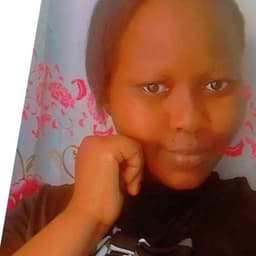
I am a young Kenyan woman who dreamed of becoming a journalist and a writer. I wanted to tell stories that mattered, especially stories about women and girls whose experiences are often overlooked. But having a dream and knowing how to reach it are two different things. There were moments when I wondered where my opportunities would come from.
Then technology began changing the distance between me and my dreams.
Through my phone, I learned how to search for opportunities beyond my immediate surroundings. I discovered writing platforms, connected with people I had never met, read stories from women in different parts of the world, and learned from experiences far beyond my own.
One of the places that changed how I saw my voice was World Pulse. When I discovered a digital community where women could share their stories and listen to one another, something shifted inside me. I realized that my experiences did not have to remain private simply because I came from a place where the world might not automatically be listening.
I could write. I could publish. I could participate in a global conversation. And someone, somewhere, might read my words and feel less alone.
That realization gave me courage.
I began writing about the things that mattered to me: women and girls, education, confidence, menstrual health, climate, dreams, challenges, and the everyday experiences that shape our lives. I discovered that technology could give an ordinary woman something extraordinary: a chance to be heard.
Every time I published a story, I felt as though I was pushing open a door that had once seemed too far away. My words could travel beyond my town, beyond my county, and beyond Kenya. I did not need to board a plane for my story to cross borders. Technology carried it for me.
But the more I became connected, the more I also saw the women who remained disconnected.
Not every girl has a smartphone. Not every young woman can afford enough data to stay online. Not every family sees technology as an important part of a girl's education. And for women who do manage to get online, the digital world can sometimes be an unsafe place. Online harassment can make women afraid to express themselves. Some withdraw from conversations because the price of being visible feels too high.
This has taught me that the digital divide is about much more than internet access. It is about opportunity.
Imagine a young woman searching for a job but unable to afford enough data to apply. Imagine a girl who could excel in an online course but has no reliable device. Imagine a small businesswoman with a wonderful product but no digital skills to reach customers beyond her neighbourhood. Imagine a talented young writer who has stories inside her but does not know that platforms exist where those stories can be published.
Sometimes, the difference between a woman discovering an opportunity and never knowing it existed is simply access to information.
That is why I believe technology must become more accessible, affordable, inclusive, and safe for women and girls.
But I have also learned that access alone is not enough. We need women who are willing to open the door for other women.
When I discover an opportunity, I want another woman to know about it. When I learn something new, I want to share it. When I find a platform where women can tell their stories, I want other women to know that their stories belong there too.
Because empowerment should not end with one woman. It should travel.
My journey with technology has also changed how I understand journalism. I once thought being a journalist was mainly about standing behind a microphone, appearing on television, or writing for a newspaper. Now I understand that journalism can also begin with a woman holding a phone and deciding that her experience deserves to be documented.
Technology has given ordinary people the ability to tell stories that traditional media may never reach. It has allowed women to become storytellers of their own lives instead of waiting for someone else to speak for them.
And that matters.
Because when women tell their own stories, they do more than describe what happened to them. They challenge silence. They create understanding. They preserve experiences. They inspire others. They remind another woman, somewhere in the world, that she is not alone.
My phone has not solved every problem in my life. Technology has not magically removed financial struggles, uncertainty, or the obstacles that come with pursuing a dream. But it has given me something I deeply value: possibility.
It has allowed me to keep learning when I had questions, to keep writing when I had doubts, to search when I did not know where an opportunity would come from, to connect when I felt that the world was far away, and to share my voice even when I was still learning to believe in it myself.
Today, when I see a young girl holding a phone, I no longer see just a device in her hands. I see possibility. I see a classroom. I see an opportunity to discover something she did not know existed.
I see a future entrepreneur finding customers, a future journalist finding her voice, a future writer finding her readers, and a future leader discovering that the world is bigger than the circumstances she was born into.
But for that future to become possible for more women, we must do more. We must make internet access affordable. We must teach girls digital skills. We must create safer online spaces. We must encourage women to participate in technology instead of allowing them to remain consumers while others make the decisions.
And we must stop telling girls that some spaces are not meant for them.
Technology belongs to women too. The digital future belongs to women too. And our stories belong there.
If there is one thing I want another woman to take from my journey, it is this: do not underestimate what you can do with the tools already in your hands.
You may not have the newest phone. You may not have perfect internet. You may not know everything. Start anyway.
Search for the knowledge you need. Learn one skill. Apply for one opportunity. Write one story. Share one idea. Connect with one woman.
And when you find your way through a door, hold it open for someone else.
Because I have learned that sometimes technology does not change your life all at once. Sometimes it simply gives you one small opportunity. Then another. Then another. Until one day, you look back and realize that the little screen you once held in your hand helped you see a future you could not see before.
That is what technology has given me.
Not just a connection to the world.
A connection to possibility.
And as I continue finding my voice as a journalist and writer, I hope to use that connection to make space for other women to find theirs.
Because the future should not only be connected.
It should be a future where every woman has the opportunity to be heard.