
Why Should Ordinary Citizens Understand Economic Forces?
Sep 16, 2026
Story
Seeking
Collaboration


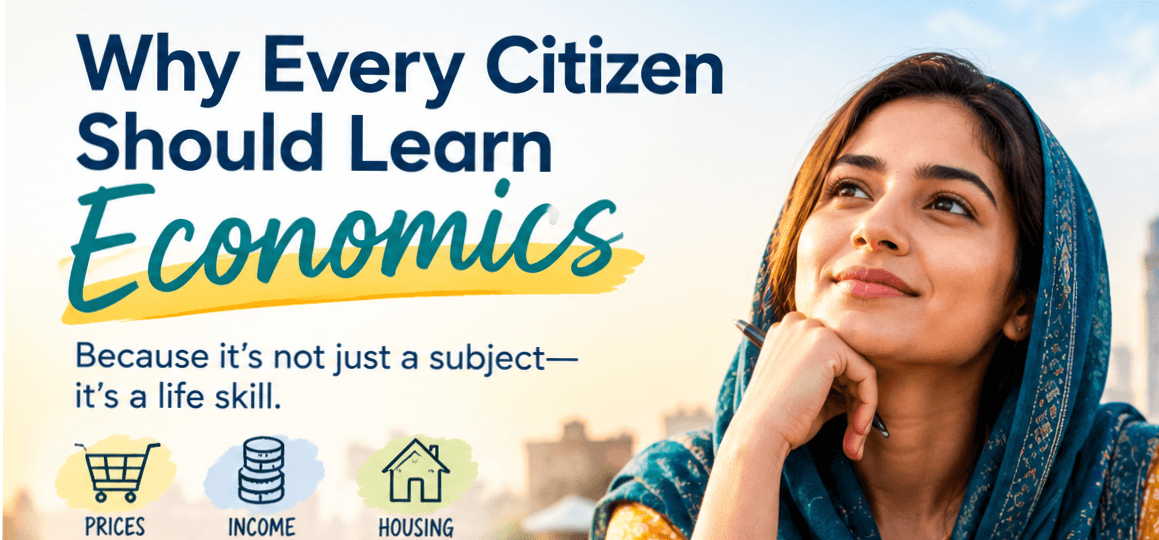
Photo Credit: ChatGPT
The evening sun was slowly disappearing behind the wheat fields of a small village in Punjab, Pakistan.Rashid sat outside his modest home, looking at the list his wife had written for Ramadan.
Dates. Bananas. Apples. Yogurt. Milk. Flour. Lentils. Cooking oil.
He read the list twice.
Then he sighed.
“Ramadan is coming, but it feels like the prices are coming faster than Ramadan,” he said.
His wife smiled faintly. “The children want fruit for iftar.”
Rashid knew what that meant.
Last Ramadan, he could buy several kinds of fruit without thinking too much about the cost. This year, the fruit seller in the nearby market had already warned him that prices would be high.
He had a limited income. There was no room in his budget for everything.
So he began cutting.
First came the extra yogurt.
Then some vegetables.
Then the better-quality lentils.
He thought, The children need fruit. We can manage without these things.
At the market the next morning, he saw the prices.
Bananas were expensive. Apples were even more expensive. Some seasonal fruits had become almost a luxury.
Rashid stood silently in front of the fruit stall.
“Give me two kilos of apples,” he finally said.
On his way home, he wondered why he had sacrificed other food items just to keep buying expensive fruit.
He had made a decision—but had he made an informed economic decision?
This is where economics stops being a university subject and becomes a matter of everyday life.
If Rashid understood some basic economic principles, he might have approached the problem differently.
He could have asked: Why are these prices rising? Is the increase temporary? Are there cheaper substitutes? Can I buy seasonal fruit instead? Can I reduce the quantity rather than eliminate other nutritious foods?
He might even have considered something more powerful.
What happens if an entire community continues buying something despite a price increase?
Demand remains strong.
Sellers have little reason to reduce prices if customers continue purchasing at those prices.
Rashid could not control the national economy. He could not control transportation costs, supply conditions, weather, wholesale prices, or market disruptions.
But he could control his own choices.
Perhaps he could buy less expensive seasonal fruit. Perhaps his family could agree to have fruit on fewer days. Perhaps several households could compare prices before purchasing. And where consumers believed prices were unfairly inflated, they could choose alternatives rather than automatically buying the expensive product.
That is economic literacy.
It does not mean that every citizen becomes an economist.
It means:
understanding enough to ask why before deciding what to do.
The same knowledge applies far beyond Ramadan.
When flour becomes expensive, we should understand supply and demand.
When petrol prices rise, we should understand how energy costs affect transportation and other goods.
When interest rates change, borrowers and savers should understand what that means for them.
When the currency loses value, citizens should understand why imported products may become more expensive.
When governments increase taxes or spending, citizens should understand how those decisions can affect households and businesses.
Economics is already sitting at our dinner tables.
It is in our grocery bags.
It is in our electricity bills.
It is in our salaries, savings, loans, businesses, and children's education.
The problem is that many ordinary citizens were taught that economics belongs to economists.
It doesn't.
A farmer needs economics.
A shopkeeper needs economics.
A student needs economics.
A homemaker needs economics.
A worker needs economics.
And Rashid, sitting in his village in Punjab and wondering whether he can afford fruit for iftar, needs it too.
Because economic knowledge does not promise that prices will fall.
It gives us something more practical:
the ability to understand the forces behind our choices—and make better-informed decisions within the choices we actually have.
Perhaps every citizen does not need an economics degree.
But every citizen deserves enough economic education to understand the economy that shapes their life.
- Indigenous Rights